How Activated Carbon Cleans Your Water: The Science Behind It
June 11, 20202 min read
Activated carbon is one of the most widely used filtration materials in the world — and for good reason. It’s highly effective at removing the contaminants that most affect the taste, smell, and safety of Australian tap water. Here’s how it works and why it matters.
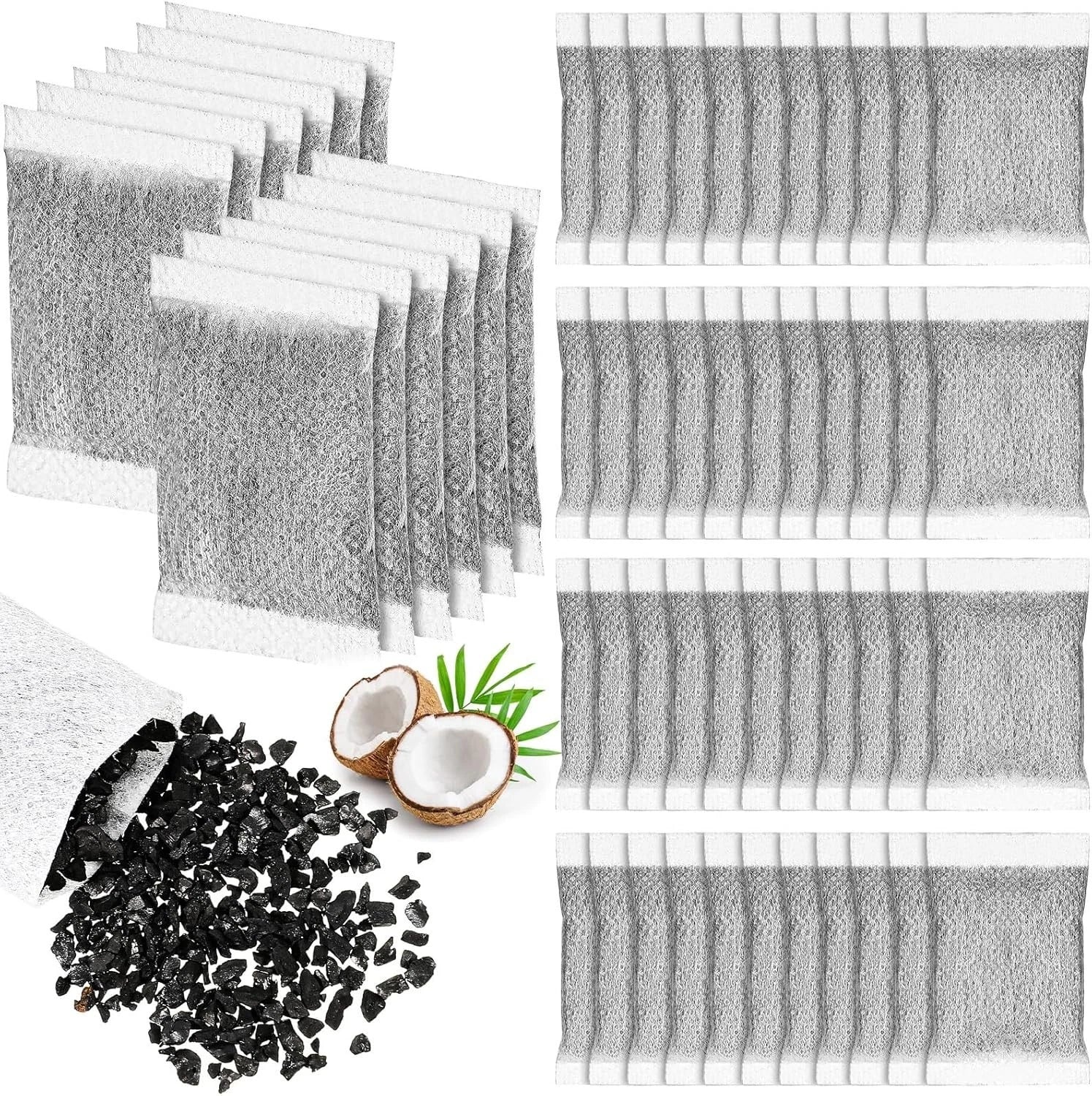
Activated carbon is carbon that has been treated with oxygen at high temperature to open up millions of tiny pores between the carbon atoms. This creates an enormous surface area — a single gram of activated carbon can have a surface area of 300–2,000 square metres. That surface area is what makes it so effective at trapping contaminants.
How Does It Clean Water?
Activated carbon works through a process called adsorption — contaminants bond chemically to the surface of the carbon as water passes through, becoming permanently trapped. This is different from absorption (where a substance is taken into the body of a material).
Activated carbon is particularly effective at removing:
Chlorine and chloramines (the main cause of that “pool water” taste in Australian tap water)
Volatile organic compounds (VOCs)
Pesticides and herbicides
Some heavy metals
Taste and odour compounds
What Activated Carbon Doesn’t Remove
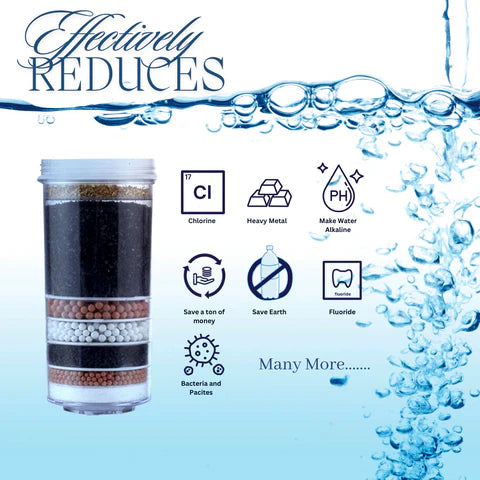
Activated carbon is not effective against dissolved minerals, nitrates, fluoride, or bacteria on its own. That’s why our 8-stage KDF filtration systems combine activated carbon with KDF media, ceramic filters, and mineral stones — each stage targeting different contaminants for comprehensive filtration. See: Why Activated Charcoal Water Filters Are Effective.
Carbon Block vs Granular Activated Carbon (GAC)
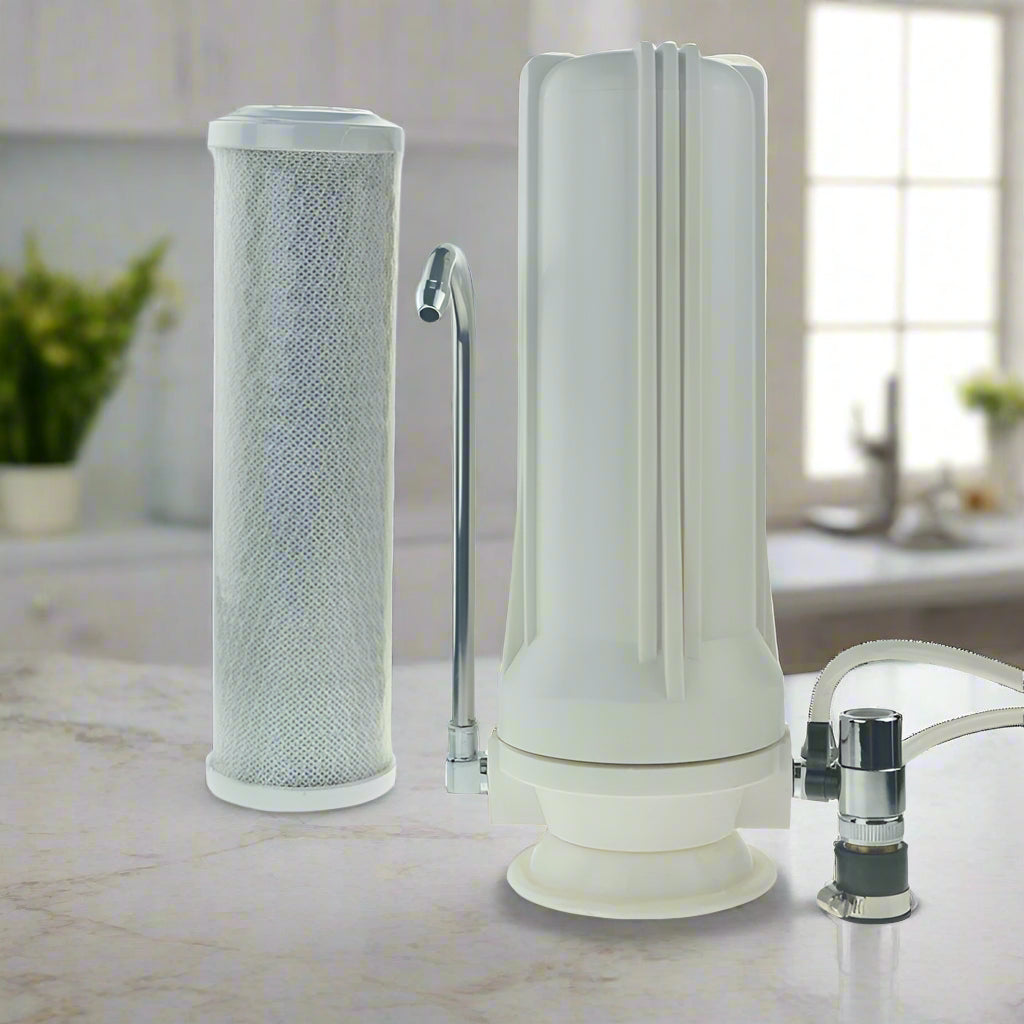
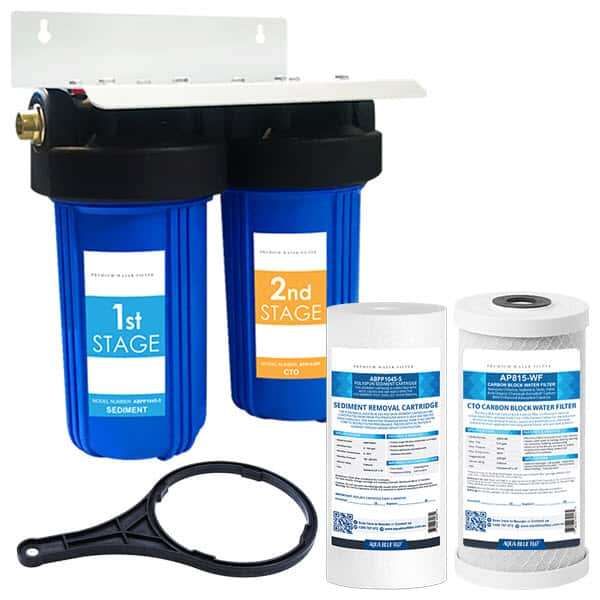
Carbon block: compressed carbon in a solid block. Water is forced through the entire block, maximising contact time and contaminant removal. Used in most quality benchtop and under sink filters.
GAC: loose carbon granules. Water can channel through gaps, reducing contact time. Lower cost; used in whole house systems where flow rate is the priority.
When to Replace Your Activated Carbon Filter
Activated carbon has a finite capacity — once the surface is saturated, it stops working. Most cartridges need replacing every 6–12 months. Signs it’s time: returning chlorine taste or smell, or reduced flow rate. Browse our replacement cartridge range.
Frequently Asked Questions
Can activated carbon filters be regenerated?
No — once the bonding sites on the carbon surface are full, the filter must be replaced. Unlike some filter media, activated carbon cannot be backwashed or regenerated at home.
Does activated carbon remove fluoride?
No — standard activated carbon doesn’t remove fluoride. For fluoride removal, you need reverse osmosis or distillation. See: Do Water Filters Remove Fluoride?
Subscribe
Sign up to get the latest on sales, new releases and more …