Whole House Water Filter and Softener Combo: Installation Costs Explained
July 29, 20213 min read
A whole house water filter and softener combo gives you the best of both worlds — contaminant removal and hard water treatment from a single point-of-entry system. Here’s a clear breakdown of what it costs in Australia and what affects the price.
Water filters and water softeners solve different problems. A filter removes chlorine, sediment, heavy metals, and chemical contaminants. A softener removes calcium and magnesium (the minerals that cause hard water scale). If your water is both hard and contains chlorine or other contaminants — which is common in many Australian towns — a combo system addresses both issues in one installation.
Cost Breakdown
System Cost
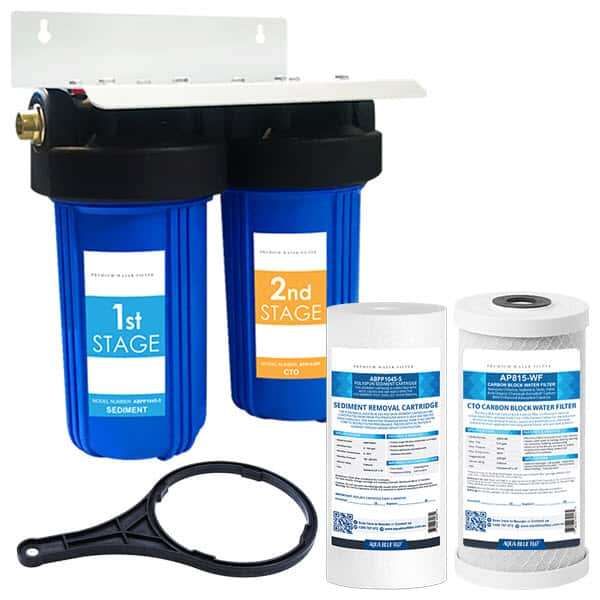
Combo systems range from $300 for a basic filter-only setup to $4,000+ for a premium multi-stage filter + salt-based softener system. The most common configuration for Australian homes — a twin Big Blue filter system paired with a salt-free scale conditioner — typically falls in the $800–$2,000 range.
Installation Cost
Professional plumber installation ranges from $400 to $1,500+ depending on:
Accessibility of the main water line
Pipe material (copper requires soldering; PEX is faster)
Number of stages and complexity of the system
Whether a bypass valve and pressure gauge are included
State and local plumber rates
For a straightforward installation on accessible plumbing, most licensed plumbers complete the job in 2–4 hours.
Ongoing Costs
Filter cartridges: $80–$200/year depending on number of stages and water quality
Salt-based softener: salt top-up every 4–8 weeks ($20–$50/bag); resin replacement every 10–15 years
Salt-free conditioner: media replacement every 3–5 years
Key Factors That Affect Total Cost
Water hardness level: harder water requires a higher-capacity softener, which costs more
Household size: larger households need higher flow rate systems (measured in GPM)
Contaminants present: iron, chloramines, or bacteria may require additional filter stages
Valve type: metered valves (which regenerate based on actual water usage) are more efficient and cost-effective long-term than timed valves
Salt vs salt-free: salt-based softeners genuinely soften water; salt-free conditioners reduce scale without adding sodium — a better choice for drinking water and gardens
Is It Worth It?
A quality combo system installed by a licensed plumber will typically last 15–20 years. Over that period, the savings on appliance repairs, plumbing maintenance, bottled water, and point-of-use filters make the upfront investment worthwhile for most households with hard or heavily chlorinated water.
Frequently Asked Questions
Do I need a plumber to install a whole house filter and softener combo?
Yes — a combo system connects to your main water supply line, which requires a licensed plumber in Australia. The filter-only component of a twin Big Blue system can be DIY-installed by confident homeowners, but the softener component and main line connection should be done by a licensed plumber.
What’s the difference between a salt-based softener and a salt-free conditioner?
A salt-based softener uses ion exchange to genuinely remove hardness minerals from the water. A salt-free conditioner changes the structure of hardness minerals so they don’t form scale, but doesn’t remove them. Salt-free conditioners are lower maintenance and better for gardens and drinking water, but don’t provide the same skin/hair benefits as true softening.
How do I know if my water is hard enough to need a softener?
Check your local water utility’s annual water quality report for hardness levels. Water above 200 mg/L (as CaCO₃) is generally considered hard enough to warrant softening. Signs of hard water include scale on taps and showerheads, poor soap lather, and spots on glassware.
Subscribe
Sign up to get the latest on sales, new releases and more …