How to Choose a Water Cooler for Your Home or Office Australia
June 26, 20264 min read
Choosing a water cooler for your home or office in Australia does not have to be complicated. The right cooler depends on how much water you use daily, how much space you have, and whether a mains connection is practical for your situation.
This guide covers the main types of water coolers available in Australia, the key factors to consider before buying, and what to look for to choose the right unit the first time.
What Type of Water Cooler Do You Need?
There are three main types of water coolers available for Australian homes and offices.
Freestanding Water Coolers
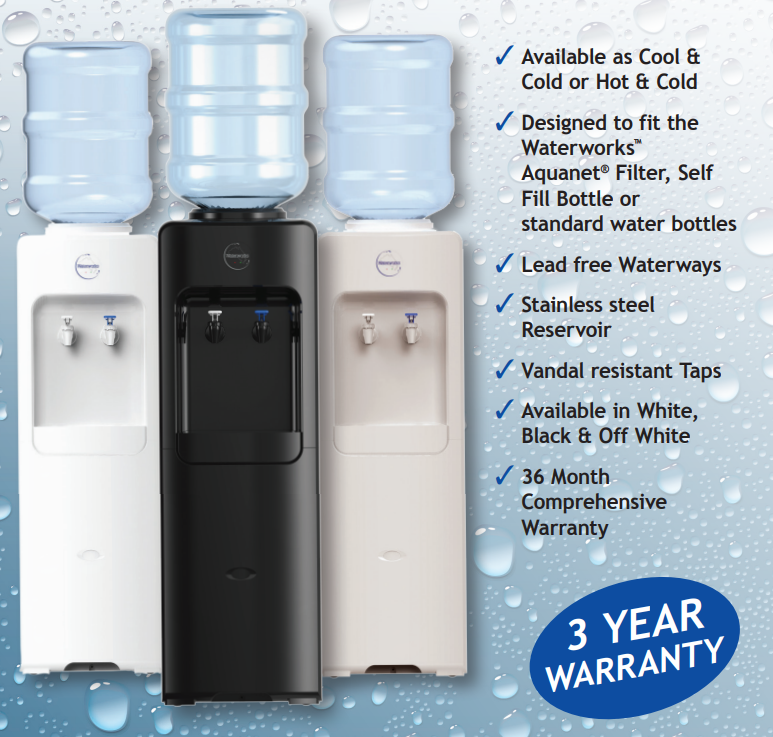
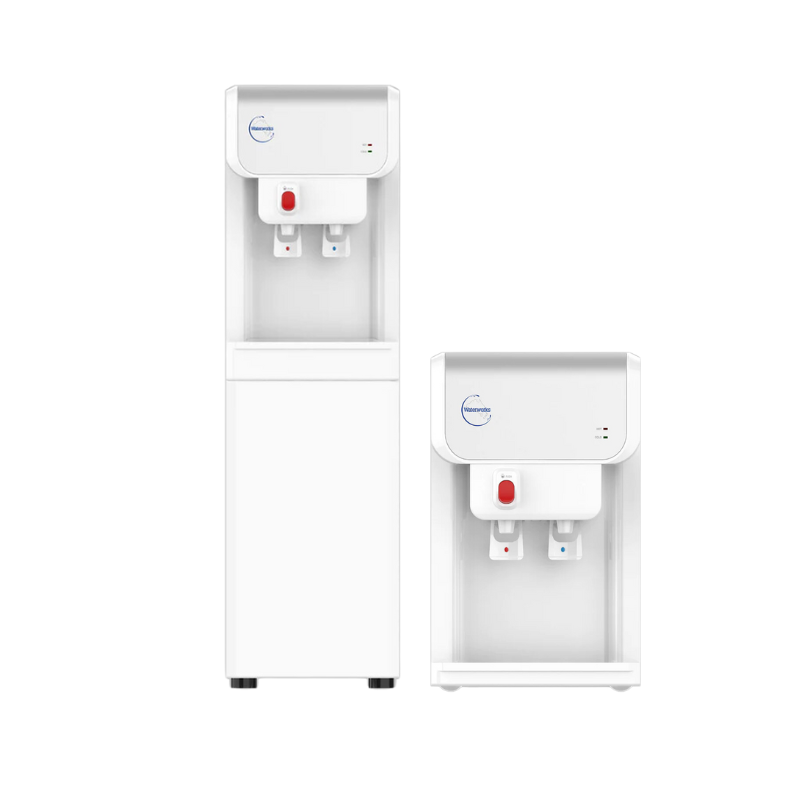
Freestanding water coolers stand on the floor and are the most popular choice for offices, waiting rooms, gyms, and larger family homes. They typically accept a standard 15-litre water bottle placed on top (top-load) or loaded from a cabinet at the base (bottom-load). Most models offer hot, cold, and ambient (room temperature) dispensing from separate taps.
Benchtop water coolers sit on a kitchen counter, office desk, or shelf. They connect to the same standard water bottles as a freestanding unit but take up bench space rather than floor space. This makes them well suited to studios, small kitchens, home offices, or any room where floor space is limited.
Bottleless water coolers — also called plumbed-in or point-of-use coolers — connect directly to your mains water supply. You never need to purchase, store, or lift heavy water bottles. Most bottleless models include a built-in filter cartridge designed to help reduce chlorine taste and odour from mains water. Professional installation by a licensed plumber is typically required for the mains connection.
Most water coolers in Australia offer chilled cold water, hot water, and ambient (room temperature) water. Some basic models offer cold and ambient only — no heating element. Confirm the model includes a hot water function before buying if hot drinks are important to you.
How Much Water Do You Use Per Day?
A standard 15-litre water bottle will typically supply one to three adults for three to five days with regular drinking use. If you have a large family or a busy office team, you may go through bottles more quickly and might benefit from a bottleless plumbed-in cooler to avoid frequent bottle changes.
Space and Placement
Freestanding coolers need clear floor space — typically around 30 to 35 cm square at the base.
Benchtop coolers take up approximately 30 to 35 cm of bench width and 45 to 55 cm depth depending on the model.
Bottleless coolers need a nearby cold water feed line. If mains connection is not available nearby, a bottle-fed model is more practical.
Bottle-Fed vs Mains-Connected
Feature
Bottle-Fed
Bottleless (Plumbed-In)
Ongoing cost
Water bottle purchase
Mains water cost plus filter replacement
Installation
Plug in — no plumbing needed
Licensed plumber required
Portability
Easy to relocate
Fixed to mains supply
Convenience
Bottles must be changed regularly
Continuous supply — no bottle changes
Best for
Homes, small offices, rentals
Busy offices, high-use settings
Home vs Office Considerations
Water Coolers for Home
For a family home, a benchtop or freestanding bottle-fed cooler is the most practical option. Most households do not need a plumbed-in unit, and a bottle-fed cooler requires no installation. If children will be using the cooler, check whether the hot water tap has a child-safety lock — most quality models include this feature.
Water Coolers for Office
In an office setting, a freestanding bottle-fed cooler is the most common choice for small to medium teams. For offices with 15 or more people, a bottleless plumbed-in cooler may reduce the time and cost of managing bottle deliveries. A freestanding cooler with hot, cold, and ambient dispensing is the most versatile option for open-plan offices or common areas.
Hot water child lock: Essential if children will be around the cooler.
Removable drip tray: Makes cleaning easier and prevents overflow spills.
Bottle compatibility: Most Australian water coolers accept standard 15-litre bottles — confirm compatibility if you already have a bottle supplier.
Warranty: Check the manufacturer warranty period. Australian Consumer Law guarantees also apply regardless of any stated warranty.
Frequently Asked Questions
Do I need a plumber to install a water cooler?
Bottle-fed water coolers — both freestanding and benchtop — require no plumbing. Simply plug in and load a water bottle. Bottleless (plumbed-in) coolers require connection to a mains cold water supply line, which should be carried out by a licensed plumber.
What size water bottle does a water cooler use?
Most Australian water coolers are designed for standard 15-litre bottles with a universal neck diameter. Some models accept 11-litre bottles. Check the product specifications if you already have a bottle supplier.
Can a water cooler filter the water?
Bottle-fed coolers dispense whatever water is in the bottle — if you want filtered water, use filtered water bottles. Bottleless plumbed-in coolers typically include a built-in filter cartridge designed to help reduce chlorine taste and odour from mains water. Confirm the filtration specification for the specific model you are considering before purchasing.
How do I clean a water cooler?
Water coolers should be cleaned every three to six months. Drain and sanitise the reservoir, taps, and drip tray using a food-safe sanitising solution. Refer to the care instructions for your specific model. For a general maintenance schedule, see our guide on how often to clean a water cooler.
Subscribe
Sign up to get the latest on sales, new releases and more …