Benchtop vs Freestanding Water Cooler: Which Is Right for You?
June 26, 20263 min read
If you are looking at water coolers in Australia, two options come up most often: benchtop water coolers and freestanding water coolers. Both dispense chilled and hot water from the same type of bottle. The main differences are size, placement, and who each type suits best.
This guide compares both types side by side so you can choose with confidence.
What Is a Benchtop Water Cooler?
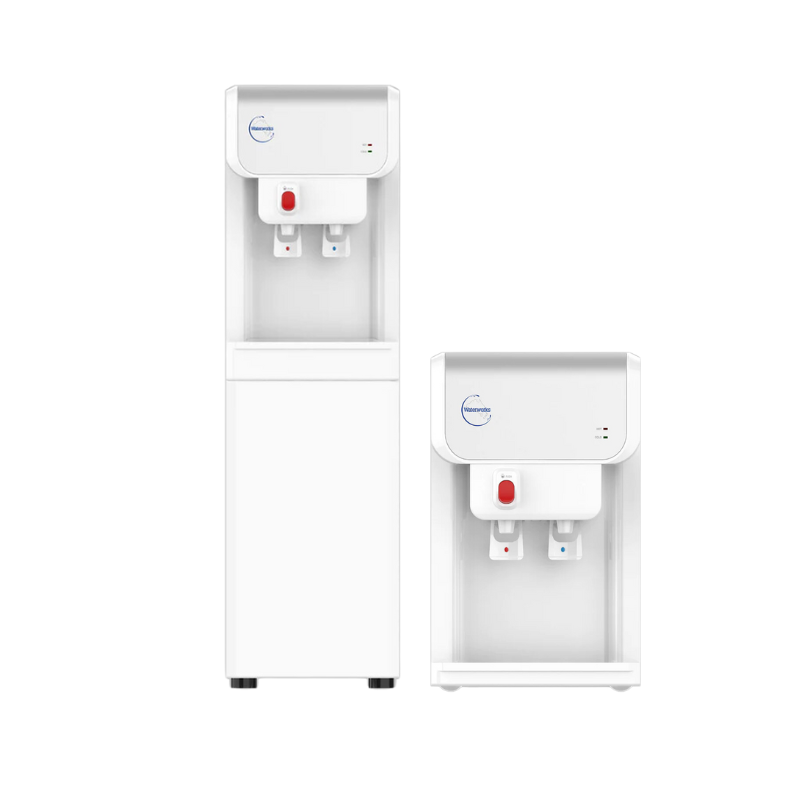
A benchtop water cooler sits on a kitchen counter, desk, or workbench. It connects to a standard 15-litre water bottle and dispenses cold water — and usually hot water — through taps at the front. Because it sits on a surface, it requires no floor space, but does need adequate bench or counter space.
Benchtop coolers are generally lighter and more compact than freestanding models, making them easier to move if you need to reposition them.
A freestanding water cooler stands on the floor. It is taller than a benchtop unit — typically around 100 to 120 cm tall — which means the taps are at a comfortable height for adults without bending. The water bottle sits on top (top-load) or loads into a cabinet at the base (bottom-load).
Freestanding coolers are the most common choice for offices, waiting rooms, gyms, and larger homes where floor space is available.
You are in a smaller home, studio, apartment, or rental with limited floor space
You want to place the cooler on a kitchen counter, desk, or workbench
You need a lighter unit that is easy to relocate
Choose a freestanding water cooler if:
You have floor space available and do not want to use bench space
You are placing the cooler in an office, reception area, gym, or warehouse break room
You prefer taps at a comfortable adult standing height
You want a unit that looks and functions like a traditional office water cooler
Does the Water Quality Differ Between the Two Types?
No — both benchtop and freestanding bottle-fed coolers dispense whatever water is in the bottle. The cooler chills the water (and heats it if the unit has a heating element) but does not add or remove anything from the water itself. Water quality comes from the bottle, not the cooler.
Most water cooler models — both benchtop and freestanding — include a hot water function. Check the product specifications before buying if hot water is important to you. Some entry-level models are cold and ambient only.
Models with hot water dispensing should have a child-safety lock on the hot tap to prevent accidental scalding. Confirm this feature is present if children will be using the cooler.
Colour Options
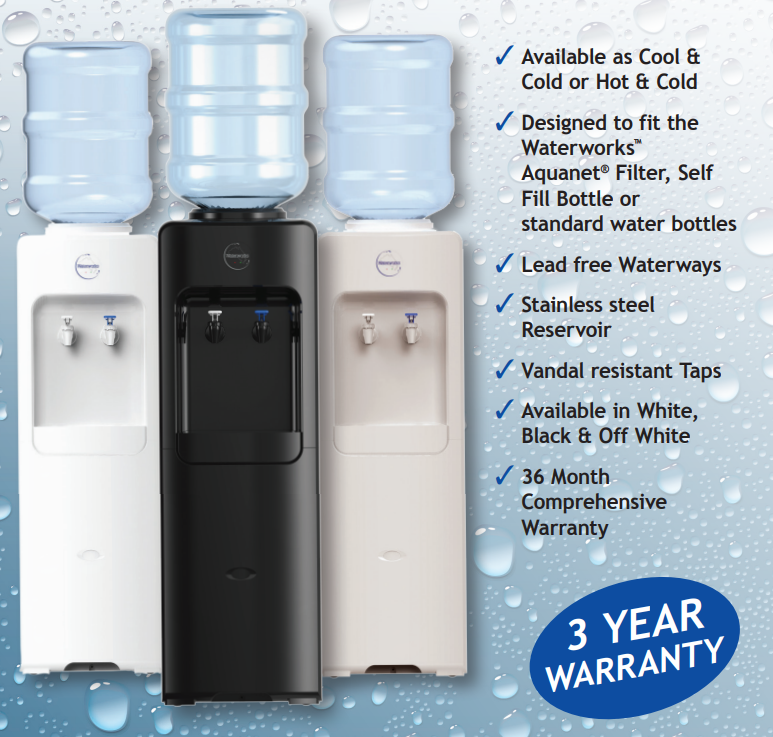
Both benchtop and freestanding water coolers are available in white and black to suit different interior styles:
Do benchtop and freestanding coolers use the same water bottles?
Yes — both types typically accept standard 15-litre water bottles with a universal neck size. Most Australian water bottle suppliers use a compatible neck format, but confirm compatibility if you already have a specific bottle supplier.
Is a benchtop water cooler as powerful as a freestanding one?
The cooling and heating capacity depends on the specific model, not whether it is benchtop or freestanding. Check the product specifications for cooling capacity if you have high-volume requirements. [NEEDS VERIFICATION: confirm cooling capacity specs per model]
Can I get a stand for my benchtop water cooler?
Some suppliers offer optional stands that convert a benchtop model to a floor-standing height. Check whether a stand accessory is available for your specific model if you want this flexibility.
Which type is cheaper to run?
Running costs are determined by the unit's power consumption, not whether it is benchtop or freestanding. Check the wattage in the product specifications for the specific model you are considering.
Subscribe
Sign up to get the latest on sales, new releases and more …