How to Filter Large Amounts of Water: Methods and Systems Explained
July 06, 20212 min read
Filtering large amounts of water — whether for a whole household, a property on bore or tank water, or a commercial setting — requires a different approach to a simple benchtop filter. Here’s a practical overview of the main methods.
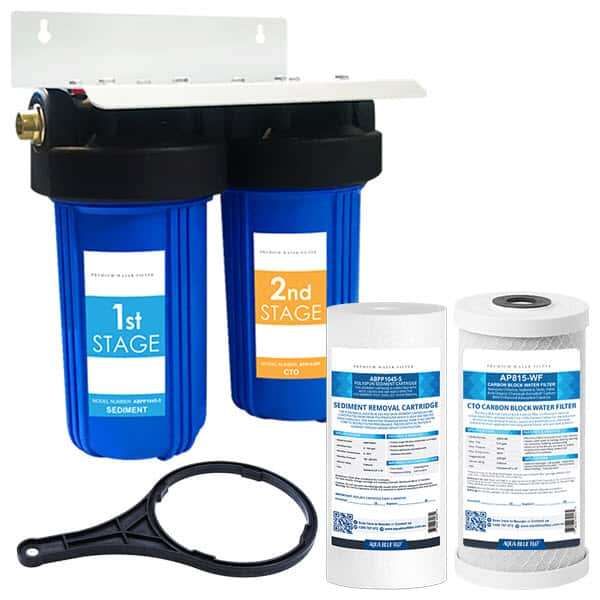
The most practical solution for Australian homes. A whole house system connects to the main water supply line and filters all water entering the property. Big Blue 10" x 4.5" housings handle high flow rates (8–15+ GPM) and accommodate large-format cartridges with longer service life between changes. A twin system (sediment + carbon) handles the main contaminants in Australian town water. Browse our whole house filter range.
Activated Carbon Filtration
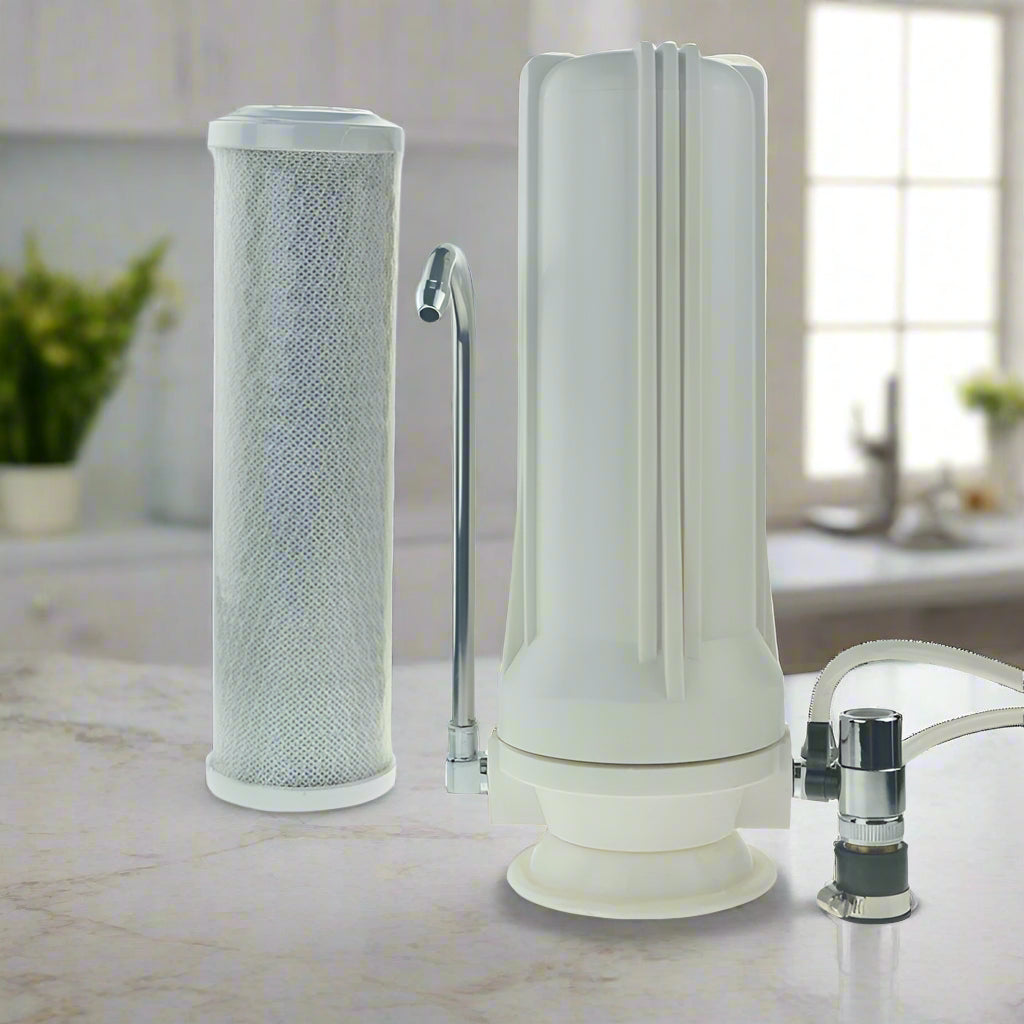
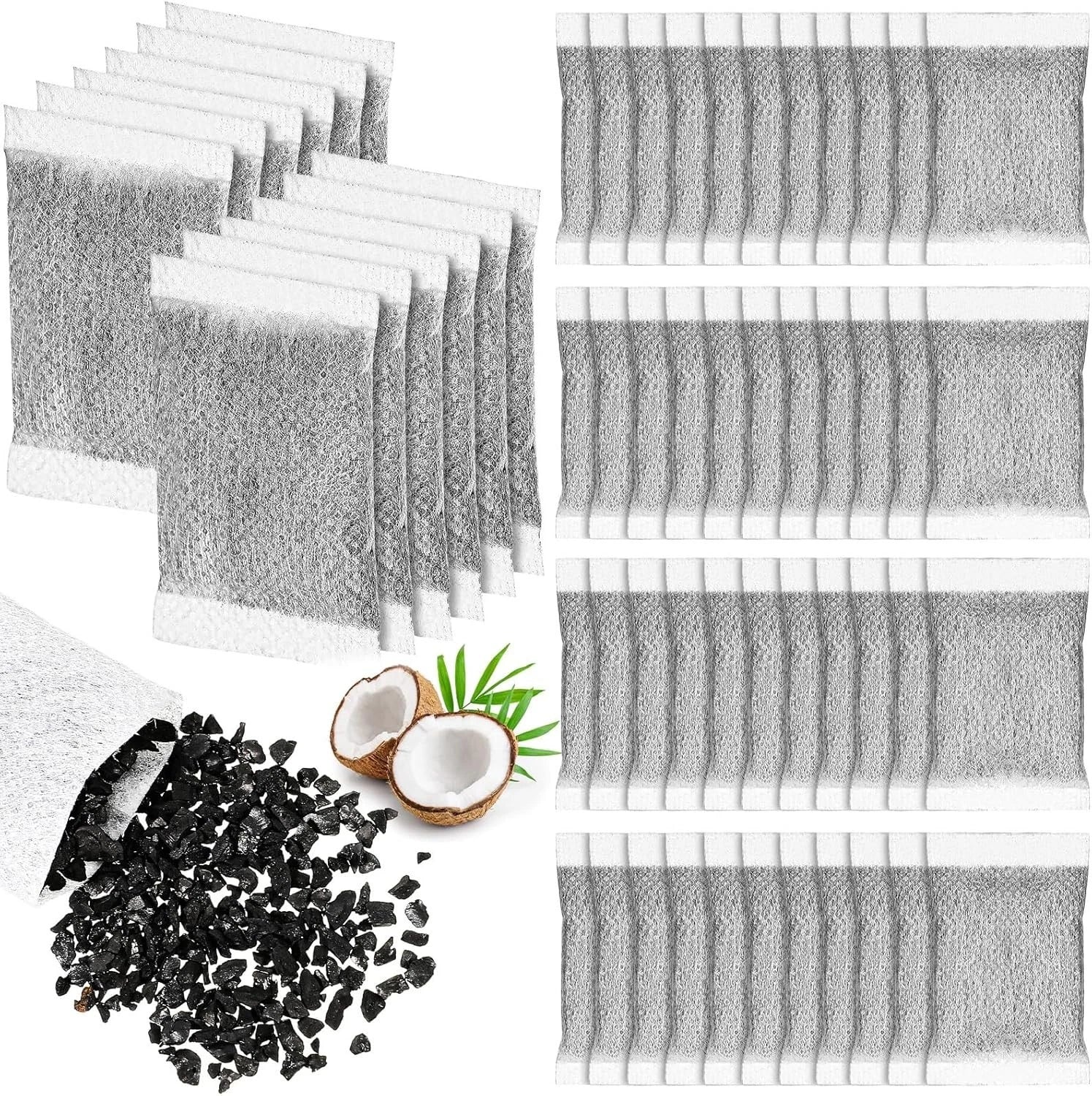
Carbon block or granular activated carbon (GAC) cartridges are the workhorse of large-volume filtration. They remove chlorine, chloramines, VOCs, pesticides, and taste/odour compounds through adsorption — contaminants bond to the carbon surface as water passes through. Carbon filters don’t remove bacteria, viruses, or fluoride.
Sediment Filtration
A sediment pre-filter is the first stage in any large-volume system. It removes sand, silt, rust, and particles that would otherwise foul downstream carbon or membrane filters. For bore or tank water with high sediment loads, a 50-micron pre-filter followed by a 5-micron stage is a common approach.
UV Sterilisation
UV light destroys the DNA of bacteria, viruses, and other microorganisms, rendering them unable to reproduce. Essential for bore water, tank water, or any supply with a biological contamination risk. UV must be used after sediment filtration — turbid water blocks UV penetration and reduces effectiveness.
Reverse Osmosis
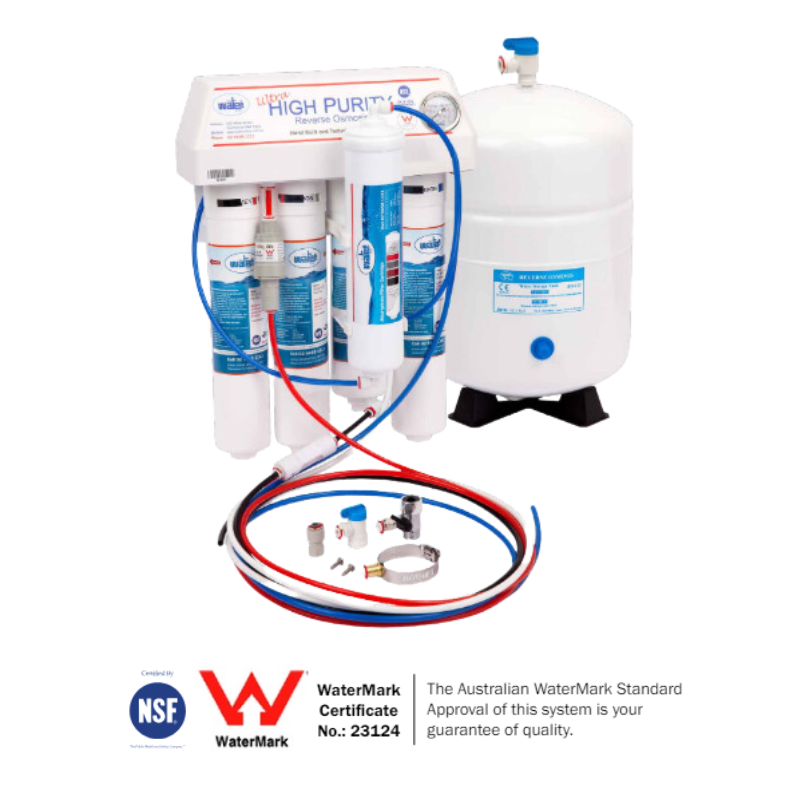
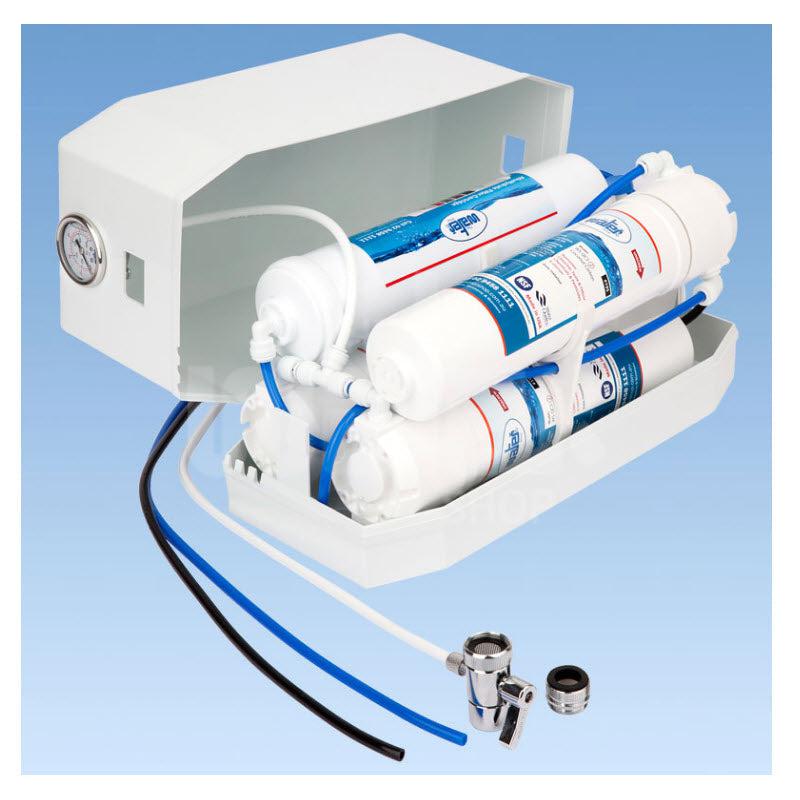
Forces water through a semi-permeable membrane, removing up to 99% of dissolved contaminants. Produces very high purity water but generates wastewater (typically 3–4 litres of waste per litre of filtered water). More practical as a point-of-use system at the kitchen tap than as a whole-house solution. Browse our RO range.
Choosing the Right Approach
Water Source
Recommended System
Town water (chlorinated)
Twin Big Blue (sediment + carbon)
Tank water (no bacteria risk)
Triple Big Blue (sediment + sediment + carbon)
Bore or tank water (bacteria risk)
Sediment + carbon + UV sterilisation
Maximum purity (drinking only)
Whole house filter + under sink RO
Frequently Asked Questions
What is the best system for filtering bore water in Australia?
Bore water typically requires sediment pre-filtration, carbon filtration, and UV sterilisation as a minimum. A water quality test is strongly recommended before choosing a system — bore water composition varies significantly by location. Call us on 1800 789 781 for advice.
How often do whole house filter cartridges need replacing?
Sediment cartridges every 2–6 months; carbon cartridges every 4–6 months. High-sediment water (bore, tank) requires more frequent replacement. See our guide: When to Change a Whole House Water Filter Cartridge.
Subscribe
Sign up to get the latest on sales, new releases and more …