Whole House Water Filter Housing: Types, Care & When to Replace
August 10, 20213 min read
The filter housing is the part of your whole house water filter that most people never think about — until it starts leaking. Here’s a practical guide to the different housing types, how to care for them, and when to replace them.
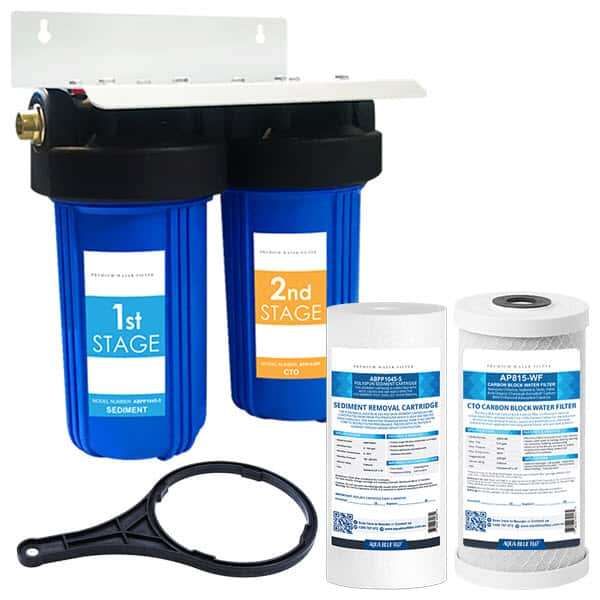
The filter housing (also called the filter bowl or sump) is the sealed vessel that holds the filter cartridge in place and directs water through it. It connects to your plumbing via inlet and outlet ports and must maintain a watertight seal under mains water pressure. The housing itself doesn’t filter anything — that’s the cartridge’s job — but a failing housing means leaks, pressure loss, and contaminated water bypassing the filter entirely.
Housing Types
Blue or White Polypropylene Housings (Most Common)
The standard choice for Australian whole house installations. Chemically resistant, durable, and suitable for residential, commercial, and industrial use. Available in 5", 10", and 20" lengths in Slim, Standard, and Giant (Big Blue) sizes. Blue housings block UV light — important for outdoor or semi-exposed installations to prevent algae growth inside the housing.
Clear Housings
Allow visual inspection of the cartridge without removing the housing — useful for monitoring cartridge condition and water colour. Made from Styrene Acrylonitrile (SAN) or Polycarbonate. Not suitable for UV-exposed locations — use blue housings outdoors.
High-Temperature Housings (Red/Black)
Glass-reinforced nylon construction for commercial and industrial applications involving hot water or elevated temperatures.
Stainless Steel Housings
For extreme pressure or temperature applications. Overkill for most residential installations but used in commercial settings.
Care Tips to Extend Housing Life
Handle carefully — avoid dropping or banging the housing bowl; cracks cause leaks
UV exposure — always use blue (opaque) bowls in any location with sunlight exposure
Freezing — never allow the housing to freeze; ice expansion cracks plastic housings
Chemical exposure — keep away from aerosol sprays, cleaning products, and insecticides
Pressure — never exceed the housing’s maximum pressure rating; install a pressure reduction valve if mains pressure is high
O-ring maintenance — lubricate the O-ring with food-grade silicone grease at every cartridge change to maintain a leak-free seal
When to Replace the Housing Bowl
Plastic housing bowls have a finite service life regardless of how well they’re maintained:
Clear bowls: replace every 5 years
Blue/opaque bowls: replace every 10 years
Write the installation date on the bowl with a permanent marker so you don’t lose track. Replace sooner if you notice any cracks, crazing, discolouration, or if the housing develops a persistent leak that O-ring replacement doesn’t fix.
Install filter housings where a leak won’t cause property damage — near a floor drain or in a garage/laundry where water can drain safely.
What Comes with a Housing Kit?
Most housing kits include: one installed O-ring + one spare O-ring, mounting bracket and hardware, and a filter bowl wrench. Keep the spare O-ring somewhere accessible — you’ll need it at the next cartridge change.
Frequently Asked Questions
Why is my filter housing leaking?
The most common cause is a worn, dirty, or incorrectly seated O-ring. Remove the housing, clean the O-ring groove, inspect the O-ring for cracks or deformation, lubricate with food-grade silicone grease, and reinstall. If leaking persists, replace the O-ring. If the housing bowl itself is cracked, replace the bowl.
Can I replace just the housing bowl without replacing the whole system?
Yes — the bowl (sump) is a separate component from the head (cap). In most cases you can replace the bowl alone. Make sure the replacement bowl is compatible with your existing head and uses the same thread size and O-ring diameter.
How do I replace the cartridge in my Big Blue housing?