Do You Need a Whole House Water Filter AND a Water Softener?
July 24, 20212 min read
A whole house water filter and a water softener are often confused — but they do completely different things. Here’s a clear explanation of when you need one, the other, or both.
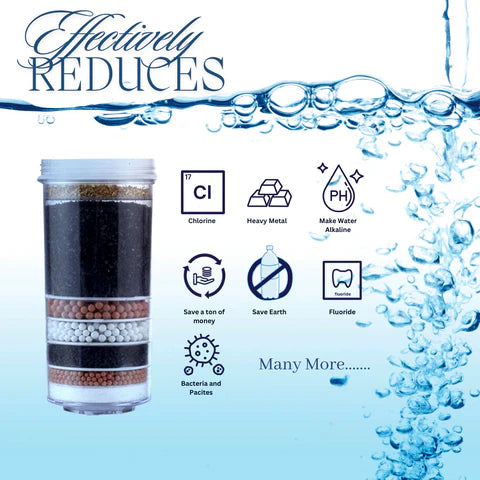
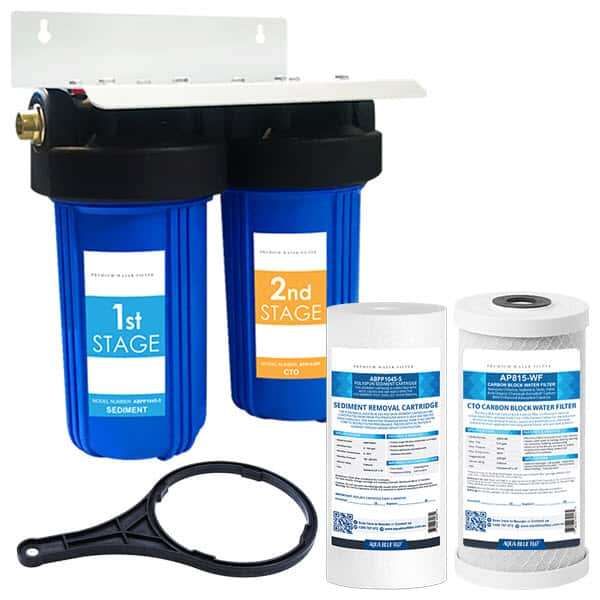
A whole house filter removes contaminants and impurities from your water at the point where the main supply enters your home. Depending on the filter stages, it removes chlorine, chloramines, sediment, heavy metals, VOCs, and taste/odour compounds. Every tap, shower, and appliance in the house receives filtered water.
What it doesn’t do: remove hardness minerals (calcium and magnesium). A standard carbon/sediment filter won’t soften your water.
What Does a Water Softener Do?
A water softener uses ion exchange to remove calcium and magnesium — the minerals that cause hard water scale. Hard water ions are swapped for sodium ions as water passes through the softener resin. The result is “softened” water that doesn’t form scale on pipes, appliances, and fixtures.
What it doesn’t do: remove chlorine, bacteria, heavy metals, or chemical contaminants. A water softener is not a water filter.
Do You Need Both?
If your water is hard and contains chlorine or other contaminants — which is common in many Australian town water supplies — then yes, both are beneficial. A filter alone won’t address scale buildup. A softener alone won’t remove chlorine or chemical contaminants.
The ideal setup combines both in sequence:
Sediment pre-filter — protects the softener resin from fouling
Water softener — removes hardness minerals
Carbon filter — removes chlorine (chlorine degrades softener resin over time, so it should come after the softener)
Salt-Free Alternatives
If you don’t want to use a salt-based softener, a salt-free scale conditioner is an alternative. It doesn’t remove hardness minerals but changes their structure so they don’t form scale. Benefits: no salt, no sodium added to water, lower maintenance, better for gardens and drinking water. Limitation: doesn’t provide the same skin/hair softening benefits as true ion exchange softening.
Frequently Asked Questions
Does a whole house water filter remove hard water?
Standard carbon and sediment filters don’t remove hardness minerals. Some specialised whole house systems include a softening stage, but most don’t. If hard water is your primary concern, a dedicated water softener or scale conditioner is needed.
Does a water softener filter drinking water?
No — a water softener removes hardness minerals but doesn’t remove chlorine, sediment, or chemical contaminants. For drinking water quality, pair a softener with a carbon filter, or add a reverse osmosis system at the kitchen tap.
How do I know if I have hard water?
Check your local water utility’s annual water quality report. Signs of hard water include white scale on taps and showerheads, poor soap lather, spots on glassware, and reduced appliance efficiency. Water above 200 mg/L (as CaCO₃) is generally considered hard.
Subscribe
Sign up to get the latest on sales, new releases and more …